
Pittsburgh Wire Fraud Lawyer
Levenson Law Firm

Wire fraud investigations often begin long before criminal charges are filed. A subpoena, search warrant, grand jury investigation, request for financial records, seizure of electronic devices, or contact from federal agents may indicate that authorities are examining emails, text messages, telephone calls, electronic payments, online transactions, or other communications allegedly connected to fraudulent conduct.
Levenson Law Firm represents individuals, executives, business owners, professionals, and other clients facing federal wire fraud investigations and prosecutions throughout Pittsburgh and the Western District of Pennsylvania.
Every case begins with a careful evaluation of the government’s allegations, financial records, electronic communications, witness statements, transaction histories, and the evidence supporting the prosecution’s theory of the case.
Criminal charges begin with allegations. Effective criminal defense begins with understanding what the evidence proves—and what it does not.
From there, we develop a legal strategy tailored to the facts, the law, and the individual client.
The strategy depends on the case. The commitment does not.
What Is Wire Fraud?
Federal wire fraud generally involves allegations that a person participated in a scheme to obtain money or property through false or fraudulent representations and used, or caused the use of, interstate or foreign wire communications to further that scheme.
The alleged wire communication may involve an email, text message, telephone call, electronic payment, bank transfer, online submission, internet communication, or another form of electronic transmission.
The existence of an inaccurate statement, failed transaction, business loss, or disputed representation does not automatically establish wire fraud. The government must prove the elements of the charged offense, including the required fraudulent intent and the connection between the alleged scheme and the wire communication.
Types of Wire Fraud Allegations
Wire fraud charges may arise in connection with many different types of alleged conduct, including:
- Bank fraud
- Credit card fraud
- Healthcare fraud
- Mortgage fraud
- Securities and investment fraud
- Tax-related fraud
- Government benefits fraud
- Embezzlement and misuse of entrusted funds
- Business opportunity or investment schemes
- Online sales and payment schemes
- False invoices or vendor-payment allegations
- Insurance or government-contract allegations
- Conspiracy and related financial offenses
Wire fraud is frequently charged as part of a broader federal investigation. Understanding the government’s theory, the client’s alleged role, and the specific communications identified in the case is essential to evaluating the evidence.
How Wire Fraud Investigations Develop
Wire fraud investigations may begin after a complaint from an alleged victim, financial institution report, regulatory referral, internal audit, whistleblower allegation, civil dispute, suspicious transaction, or investigation into related financial conduct.
Depending on the circumstances, investigators may obtain:
- Emails, text messages, and messaging-platform communications
- Telephone and account records
- Bank statements and electronic-transfer records
- Payment-platform and merchant records
- Contracts, invoices, and business documents
- Accounting records and financial analyses
- Computers, phones, tablets, and cloud-stored data
- Recorded interviews and witness statements
- Search warrants and grand jury subpoenas
- Evidence obtained from alleged victims, employees, business partners, or cooperating witnesses
Early legal guidance can be critical. Decisions about speaking with federal agents, producing records, consenting to searches, or providing electronic-device access may significantly affect the course of the investigation.
Electronic Communications and Digital Evidence
Wire fraud prosecutions often depend heavily on electronic evidence. Emails, text messages, online account activity, payment records, metadata, internet records, and data recovered from electronic devices may become central to the government’s case.
Individual communications should not always be interpreted in isolation. Their meaning may depend on the surrounding conversation, the parties’ business relationship, the information available at the time, and the broader context in which the communication occurred.
A careful defense may require examining the completeness, authenticity, source, timing, and interpretation of the electronic evidence rather than accepting the government’s characterization of selected messages or transactions.
Intent and the Alleged Scheme to Defraud
Fraudulent intent is a central issue in a wire fraud prosecution. The government must prove more than the existence of an electronic communication or an unsuccessful transaction.
Depending on the case, the evidence may raise questions concerning whether the client knowingly participated in fraudulent conduct, understood that a representation was inaccurate, intended to cause financial harm, or reasonably relied on information provided by someone else.
Business disputes, incomplete records, poor communication, negligence, changed circumstances, or unsuccessful ventures do not necessarily establish criminal intent. Evaluating the full factual record is essential before drawing conclusions about what the evidence proves.
Related Federal Charges
Wire fraud may be charged alongside other federal offenses, including conspiracy, mail fraud, bank fraud, identity theft, false statements, money laundering, obstruction of justice, or offenses connected to the alleged underlying conduct.
Related charges may substantially affect the scope of the investigation, discovery, potential sentencing exposure, forfeiture allegations, and the overall defense strategy.
Levenson Law Firm evaluates the entire federal case rather than treating each count in isolation. That includes examining how the charges relate to one another, whether the evidence supports the government’s theory, and what legal or factual issues may affect particular counts.
Evidence and Constitutional Issues
Wire fraud prosecutions frequently involve extensive documentary, financial, and electronic evidence. Depending on the circumstances, the defense may examine:
- Search warrants and supporting affidavits
- Grand jury subpoenas and document demands
- Emails, text messages, and digital communications
- Bank, payment, and transaction records
- Computer and cellphone forensic examinations
- Contracts, invoices, and business records
- Financial analyses and loss calculations
- Recorded statements and agent interview reports
- Witness credibility and cooperating-witness testimony
- Whether investigators lawfully obtained the government’s evidence
The defense may also evaluate whether the government has presented the communications in context, accurately attributed the alleged statements or transactions, and established the client’s knowing participation in the alleged scheme.
Potential Consequences of a Wire Fraud Conviction
A wire fraud conviction may expose a defendant to imprisonment, supervised release, fines, restitution, forfeiture, and other criminal penalties. Allegations involving substantial financial loss, multiple victims, sophisticated means, abuse of trust, or related offenses may significantly affect sentencing.
In addition to criminal penalties, an investigation or conviction may affect employment, professional licensing, business ownership, financial relationships, immigration status, reputation, and future career opportunities.
Federal prosecutors may also seek forfeiture of money or property allegedly connected to the offense. Careful evaluation of loss, restitution, forfeiture, and sentencing issues is therefore an important part of the defense.
What Clients Can Expect From Levenson Law Firm
Every wire fraud matter begins with a careful review of the government’s allegations, electronic communications, financial records, witness statements, and the applicable law. We identify the strongest legal and factual issues, explain the available options, and develop a strategy tailored to the client’s circumstances and objectives.
We intentionally maintain a selective caseload so every matter receives the time, preparation, and professional judgment it deserves. Wire fraud cases often require disciplined analysis of extensive electronic and financial evidence, careful evaluation of intent, and thoughtful strategic decision-making.
No lawyer can honestly promise a particular result. What we can promise is careful preparation, sound professional judgment, and individualized representation throughout every stage of the investigation, prosecution, sentencing, appeal, or related proceeding.
Frequently Asked Questions About Wire Fraud
Is Wire Fraud a Federal Offense?
Yes. Wire fraud is prosecuted under federal law. The alleged use of interstate or foreign electronic communications provides the federal connection for the charge.
Does the Government Have to Prove That Money Was Actually Lost?
Not every case requires proof that the alleged scheme succeeded or that the intended loss was fully realized. The precise issues depend on the charge, the government’s theory, and the evidence presented.
Can an Email or Text Message Support a Wire Fraud Charge?
Yes. Emails, text messages, electronic payments, telephone calls, online submissions, and other electronic communications may be alleged as wires used to further a fraudulent scheme.
Should I Speak With Federal Agents Before Hiring a Lawyer?
You should seek legal advice before participating in an interview, making a statement, producing records, or providing access to an electronic device. Statements made during an investigation may later be used by prosecutors.
What Evidence Is Commonly Used in Wire Fraud Cases?
Emails, text messages, telephone records, bank records, electronic-transfer information, contracts, invoices, accounting records, digital-device evidence, witness testimony, and financial analyses frequently play significant roles in wire fraud investigations and prosecutions.
Contact Levenson Law Firm
Call For A Consultation
917-406-7165
Testimonials
Amy is a highly experienced and dedicated counsel who consistently demonstrates exceptional professionalism and legal expertise. She approaches every case with genuine care, treating her clients like family while maintaining the highest standards of integrity and diligence. Amy goes above and beyond to advocate for her clients, ensuring that every detail is handled with precision to achieve the best possible results. If you have a legal matter and are…
Prem B.
We are very pleased Levenson Law Firm. They explained the plan and options. They were friendly and willing for a FaceTime call or zoom meeting. They did an excellent job with our case.
Jacquelyn D.
Amy Levenson is very professional, proactive and has great insights how to handle situations. She is a calm presence to her clients and prioritizes their best interests. She delivered for us. I would use her again in a heartbeat!
Marilyn P.
I couldn’t recommend them more.
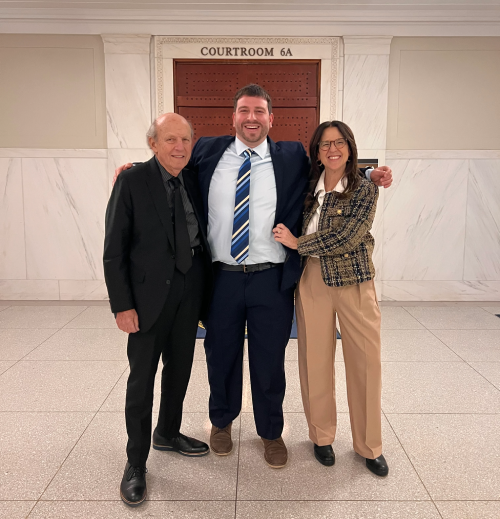
Trust is earned, and that’s why I’m writing this. Before my case even officially started, I walked into office after office and watched lawyers practically drooling for a retainer. Sharks. Pressure. Fear. Felt like everyone was trying to get paid before they even listened. Then I met Stan Levenson. No pitch. No panic. No hand out. He just sat with me, calm, and told me the truth: “Nobody’s kicking…
Milty B
Thanks for all of your diligence and hard work to resolve the case. Your insight into how to proceed and your calm manner when we were at our lowest was most appreciated. From the first contact with you and Stan through resolution of this case, you have always acted in the utmost professional way and with our best interests in mind. I am very satisfied with your work
M.P.

Strategic Criminal Defense Evidence. Strategy. Every Client Matters.
Tell Us About Your Case
Fields Marked With An “*” Are Required

Call
Call Amy Jones at 917-406-7165
Email Amy Jones at [email protected]
Mailing Address
1800 Murray Ave
PO Box 81030
Pittsburgh, PA 15217
© 2026 Levenson Law Firm • All Rights Reserved.
Digital Marketing By: 
*Images are obtained under license from Canva and other third-party stock image providers, with attribution included where required.