Pittsburgh Post-Conviction Relief Lawyer
Levenson Law Firm

Pittsburgh Post-Conviction Relief Lawyer
A criminal conviction does not necessarily end the opportunity to challenge a judgment or sentence. Depending on the circumstances, Pennsylvania and federal law provide procedures for seeking relief from certain convictions, sentences, and constitutional violations.
Post-conviction proceedings involve distinct legal standards, strict filing deadlines, and procedural requirements. Identifying the appropriate remedy and preserving available claims can be critical.
Levenson Law Firm represents individuals seeking post-conviction relief in Pittsburgh, Western Pennsylvania, and federal court. Amy Jones provides strategic, individualized representation grounded in careful review of the trial record, applicable law, and the circumstances of each case.
Understanding Pennsylvania’s Post Conviction Relief Act
The Pennsylvania Post Conviction Relief Act (PCRA), 42 Pa.C.S. §§ 9541–9546, establishes a procedure for eligible individuals to challenge certain Pennsylvania criminal convictions and sentences after the judgment becomes final.
The PCRA is not a substitute for a direct appeal. It provides relief for specific categories of claims recognized by statute, subject to eligibility requirements, procedural limitations, and strict deadlines.
Potential grounds for PCRA relief include:
- Ineffective assistance of counsel: Claims that constitutionally deficient representation prejudiced the defense.
- Constitutional violations: Certain violations of the Pennsylvania or United States Constitution that undermine the reliability of the conviction or sentence.
- Involuntary guilty pleas: Claims involving pleas unlawfully induced under circumstances where the inducement likely caused the individual to plead guilty.
- Improper government interference: Certain violations involving unlawful interference by government officials with the presentation of a defense or appeal.
- Newly discovered evidence: Claims based on qualifying evidence that was unavailable at trial and could not have been obtained through reasonable diligence.
- Sentences exceeding the lawful maximum: Claims involving sentences greater than those authorized by law.
Not every alleged trial error or unfavorable result provides a basis for PCRA relief. Claims must satisfy the applicable statutory and procedural requirements.
Strict Deadlines for Pennsylvania Post-Conviction Relief
Timing is one of the most important considerations in post-conviction litigation.
Under 42 Pa.C.S. § 9545(b), a PCRA petition generally must be filed within one year after the judgment of sentence becomes final, unless a statutory exception applies.
For PCRA purposes, a judgment generally becomes final at the conclusion of direct review, including discretionary review in the United States Supreme Court and Pennsylvania Supreme Court, or when the time for seeking that review expires.
The PCRA recognizes limited exceptions involving certain governmental interference, newly discovered facts, and newly recognized constitutional rights that have been held to apply retroactively. These exceptions are subject to additional statutory requirements, including a separate filing deadline.
The PCRA’s timing requirements are jurisdictional. A court generally cannot consider an untimely petition unless the petitioner establishes an applicable exception.
Because determining finality and applicable deadlines can be complicated, individuals considering post-conviction relief should seek legal advice promptly.
Direct Appeals, PCRA Petitions, and Federal Post-Conviction Relief
Different procedures apply depending on the nature of the conviction, the stage of the case, and the legal issues being raised.
Pennsylvania Direct Appeals
A direct appeal generally challenges legal errors in the proceedings leading to a conviction or sentence. In Pennsylvania criminal cases, a notice of appeal ordinarily must be filed within 30 days of the appealable order, subject to the rules governing timely post-sentence motions and other applicable procedures.
A post-sentence motion generally must be filed within 10 days after imposition of sentence, although the governing rules and procedural circumstances must be examined carefully.
Pennsylvania PCRA Petitions
PCRA proceedings generally address qualifying collateral claims after a judgment becomes final. These may include ineffective assistance of counsel and certain other statutory grounds for relief.
PCRA litigation may involve review of the existing record, investigation of facts outside the trial record, evidentiary hearings, and appellate proceedings.
Federal Post-Conviction Relief
Federal convictions are not challenged under Pennsylvania’s PCRA. A person convicted in federal court may have remedies under federal law, including a motion under 28 U.S.C. § 2255 where applicable.
Federal post-conviction proceedings have their own substantive standards, procedural restrictions, and filing deadlines.
Determining the appropriate avenue for relief requires careful analysis of the conviction, procedural history, and potential claims.
Individualized Post-Conviction Representation at Levenson Law Firm
Post-conviction litigation requires more than identifying a possible error. Counsel must determine whether the claim is legally cognizable, whether it has been preserved or previously litigated, whether applicable deadlines have been satisfied, and what evidence is necessary to establish entitlement to relief.
At Levenson Law Firm, clients work directly with Amy Jones. She evaluates the procedural history, examines the relevant record, identifies potentially viable claims, and provides candid advice about the available legal options.
Depending on the case, representation may involve preparing a PCRA petition, developing ineffective-assistance claims, reviewing newly discovered evidence, litigating an evidentiary hearing, or pursuing an available appeal from a post-conviction ruling.
The firm maintains a selective caseload to provide the attention, preparation, and professional judgment these matters require.
Learn more about Levenson Law Firm and our Pennsylvania federal criminal defense practice.
Contact Levenson Law Firm
Call For A Consultation
917-406-7165
Evaluating Your Options for Post-Conviction Relief
Determining whether a conviction or sentence can be challenged requires a careful review of the procedural history, applicable deadlines, and potential legal claims.
The appropriate remedy depends on several considerations, including:
- Jurisdiction: Whether the conviction arose in Pennsylvania state court or federal court.
- Procedural history: Whether a direct appeal or previous post-conviction petition has been filed and resolved.
- Finality: When the judgment of sentence became final for purposes of the applicable filing requirements.
- Nature of the claim: Whether the alleged error is properly addressed through direct appeal, a PCRA petition, or another available procedure.
- Supporting evidence: Whether the claim can be established through the existing record or requires additional investigation and evidence.
- Procedural restrictions: Whether the claim has been waived, previously litigated, or otherwise restricted under applicable law.
Not every legal error provides grounds for post-conviction relief. A successful petition must satisfy the requirements of the governing statute and applicable case law.
Where Are Pennsylvania Post-Conviction Claims Filed?
A Pennsylvania PCRA petition is generally filed in the Court of Common Pleas where the conviction occurred.
For convictions arising in Allegheny County, PCRA proceedings ordinarily begin in the Allegheny County Court of Common Pleas.
Depending on the circumstances, a PCRA court may review the petition, permit amendment, provide notice of its intention to dismiss without a hearing, conduct an evidentiary hearing, or enter another appropriate order.
An appeal from a PCRA ruling in an ordinary Pennsylvania criminal case generally proceeds to the Pennsylvania Superior Court. Further discretionary review may be sought in the Pennsylvania Supreme Court where authorized.
Federal post-conviction proceedings follow different rules. A motion under 28 U.S.C. § 2255 generally must be filed in the federal district court that imposed the sentence. Appeals are subject to additional procedural requirements, including the certificate-of-appealability provisions where applicable.
Ineffective Assistance of Counsel Claims
Claims involving ineffective assistance of counsel are among the issues frequently raised in Pennsylvania PCRA proceedings.
These claims may involve allegations that counsel failed to investigate relevant evidence, pursue an available legal issue, provide constitutionally adequate advice concerning a guilty plea, or otherwise satisfy applicable professional and constitutional standards.
However, an unfavorable result or disagreement with an attorney’s strategic decisions does not, by itself, establish ineffective assistance.
Under Pennsylvania law, ineffective-assistance claims generally require analysis of whether the underlying claim has arguable merit, whether counsel lacked a reasonable basis for the challenged action or inaction, and whether the petitioner suffered legally cognizable prejudice.
Evaluating these claims may require review of transcripts, pleadings, discovery materials, correspondence, and other relevant evidence.
Newly Discovered Evidence and Post-Conviction Claims
Evidence discovered after trial may provide grounds for post-conviction relief in certain circumstances.
Whether newly discovered evidence supports relief depends on the applicable statutory requirements, the nature of the evidence, the timing of its discovery, and whether it could have been obtained earlier through reasonable diligence.
Different legal standards may apply to a substantive after-discovered-evidence claim and to an exception to the PCRA’s filing deadline based on newly discovered facts.
Identifying new information is therefore only the beginning of the analysis. Counsel must determine whether the evidence supports a legally recognized claim and whether the court has jurisdiction to consider it.
Federal Sentencing Relief and Other Post-Conviction Remedies
Federal law provides several potential avenues for challenging or modifying a federal sentence, but each has distinct eligibility requirements.
Depending on the circumstances, these may include a motion under 28 U.S.C. § 2255, a sentence reduction authorized by 18 U.S.C. § 3582(c), or another procedure expressly permitted by federal law.
Amendments to the United States Sentencing Guidelines do not automatically entitle every previously sentenced individual to a reduced sentence. Eligibility depends on the particular amendment, whether it applies retroactively, and the governing statutory and guideline requirements.
Compassionate release under 18 U.S.C. § 3582(c)(1)(A) is a separate form of relief with its own substantive and procedural requirements.
Learn more about our federal sentence reduction representation.
Frequently Asked Questions About Post-Conviction Relief
Can I File a PCRA Petition After My Direct Appeal?
Potentially. PCRA proceedings generally follow the conclusion of direct review, but eligibility and timing depend on the procedural history and governing law.
The PCRA’s one-year filing deadline ordinarily runs from the date the judgment becomes final, subject to limited statutory exceptions.
Does Filing a PCRA Petition Guarantee a Hearing?
No. A PCRA court may dismiss a petition without an evidentiary hearing when the applicable legal requirements for dismissal are satisfied.
Whether a hearing is warranted depends on the claims presented, the existing record, and whether there are genuine issues of material fact requiring resolution.
Can a Guilty Plea Be Challenged Through the PCRA?
In some circumstances, yes. The PCRA recognizes certain claims involving unlawfully induced guilty pleas, and ineffective-assistance claims may also arise from plea proceedings.
Relief depends on the applicable legal standards, supporting evidence, and procedural requirements. A change of mind about a plea does not, by itself, establish entitlement to relief.
Can I Challenge a Federal Conviction Under Pennsylvania’s PCRA?
No. Pennsylvania’s PCRA applies to qualifying Pennsylvania criminal judgments, not federal convictions.
Federal convictions may be challenged through applicable federal procedures, including 28 U.S.C. § 2255 in appropriate circumstances.
What Happens if My PCRA Petition Is Successful?
The available relief depends on the nature of the claim and the court’s findings.
Depending on the circumstances, relief may include a new trial, resentencing, reinstatement of appellate rights, or another remedy authorized by law.
A successful PCRA petition does not necessarily result in immediate release or dismissal of all charges.
Speak With a Pittsburgh Post-Conviction Relief Lawyer
If you believe your Pennsylvania or federal conviction or sentence may be subject to challenge, prompt legal advice is important. Post-conviction remedies involve strict deadlines and procedural requirements that can affect whether a court may consider your claims.
Amy Jones, founder and principal of Levenson Law Firm, provides direct, individualized representation in serious criminal and post-conviction matters. She approaches these cases through careful record review, legal analysis, and candid evaluation of the available options.
Request a Confidential Consultation or call Amy Jones directly at (917) 406-7165.
Testimonials
Amy is a highly experienced and dedicated counsel who consistently demonstrates exceptional professionalism and legal expertise. She approaches every case with genuine care, treating her clients like family while maintaining the highest standards of integrity and diligence. Amy goes above and beyond to advocate for her clients, ensuring that every detail is handled with precision to achieve the best possible results. If you have a legal matter and are…
Prem B.
We are very pleased Levenson Law Firm. They explained the plan and options. They were friendly and willing for a FaceTime call or zoom meeting. They did an excellent job with our case.
Jacquelyn D.
Amy Levenson is very professional, proactive and has great insights how to handle situations. She is a calm presence to her clients and prioritizes their best interests. She delivered for us. I would use her again in a heartbeat!
Marilyn P.
I couldn’t recommend them more.
Trust is earned, and that’s why I’m writing this. Before my case even officially started, I walked into office after office and watched lawyers practically drooling for a retainer. Sharks. Pressure. Fear. Felt like everyone was trying to get paid before they even listened. Then I met Stan Levenson. No pitch. No panic. No hand out. He just sat with me, calm, and told me the truth: “Nobody’s kicking…
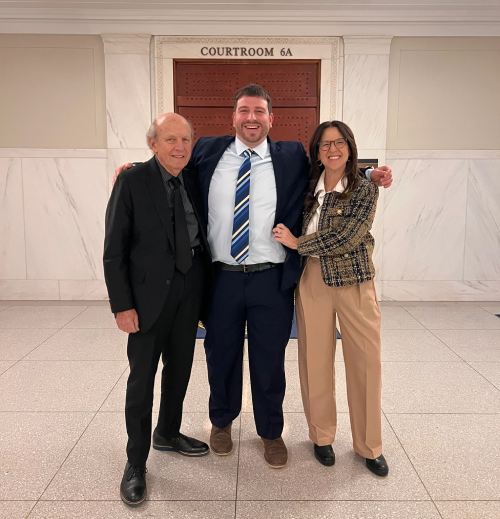
Milty B
Thanks for all of your diligence and hard work to resolve the case. Your insight into how to proceed and your calm manner when we were at our lowest was most appreciated. From the first contact with you and Stan through resolution of this case, you have always acted in the utmost professional way and with our best interests in mind. I am very satisfied with your work
M.P.
Strategic Criminal Defense Evidence. Strategy. Every Client Matters.
Tell Us About Your Case
Fields Marked With An “*” Are Required

Call
Call Amy Jones at 917-406-7165
Email Amy Jones at [email protected]
Mailing Address
1800 Murray Ave
PO Box 81030
Pittsburgh, PA 15217
© 2026 Levenson Law Firm • All Rights Reserved.
Digital Marketing By: 
*Images are obtained under license from Canva and other third-party stock image providers, with attribution included where required.