
Pittsburgh Professional License Defense Lawyer
Levenson Law Firm
Pittsburgh Professional License Defense Attorney
When you are a professional facing criminal charges, it isn’t just your personal life hanging in the balance; it is also your professional license and reputation. In addition to representing professionals charged with criminal offenses, we also have extensive experience representing professionals before the various professional licensing boards.
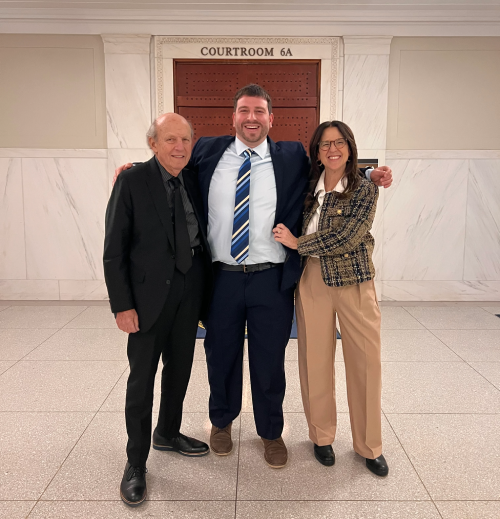
At Levenson Law Firm, Pittsburgh professional license defense attorney Amy B. Levenson Jones works on every case they take. Amy brings experience, proven techniques, straight talk, brings youth, new thinking, and a female perspective. When your future is at stake, it’s smart to have our team of two fighting on your behalf.
Learn more about some of the professionals in Pittsburgh, Pennsylvania we have successfully represented over the years. Contact us today.
Not Guilty
- D charged with Summary offense “Open Container Law” – MC § 601.08a
- Potential penalty is a fine however guilty plea or conviction would have required reporting to his professional association and might have resulted in employment disruption or termination
- Court accepted Not Guilty plea; docket expunged
Testimonials
Amy is a highly experienced and dedicated counsel who consistently demonstrates exceptional professionalism and legal expertise. She approaches every case with genuine care, treating her clients like family while maintaining the highest standards of integrity and diligence. Amy goes above and beyond to advocate for her clients, ensuring that every detail is handled with precision to achieve the best possible results. If you have a legal matter and are seeking the strongest representation and the best outcome, Amy is the attorney you can trust.
Prem B.
We are very pleased Levenson Law Firm. They explained the plan and options. They were friendly and willing for a FaceTime call or zoom meeting. They did an excellent job with our case.
Jacquelyn D.
Amy Levenson is very professional, proactive and has great insights how to handle situations. She is a calm presence to her clients and prioritizes their best interests. She delivered for us. I would use her again in a heartbeat!
Marilyn P.
I couldn’t recommend them more.
Trust is earned, and that’s why I’m writing this. Before my case even officially started, I walked into office after office and watched lawyers practically drooling for a retainer. Sharks. Pressure. Fear. Felt like everyone was trying to get paid before they even listened. Then I met Stan Levenson. No pitch. No panic. No hand out. He just sat with me, calm, and told me the truth: “Nobody’s kicking your door in. These cases move slow. Could take years.” For the first time, I actually exhaled. And he was dead…
Milty B
Thanks for all of your diligence and hard work to resolve the case. Your insight into how to proceed and your calm manner when we were at our lowest was most appreciated. From the first contact with you and Stan through resolution of this case, you have always acted in the utmost professional way and with our best interests in mind. I am very satisfied with your work
M.P.

Strategic Criminal Defense Evidence. Strategy. Every Client Matters.
Tell Us About Your Case
Fields Marked With An “*” Are Required

Call
Call Amy Jones at 917-406-7165
Email Amy Jones at [email protected]
Mailing Address
1800 Murray Ave
PO Box 81030
Pittsburgh, PA 15217
© 2026 Levenson Law Firm • All Rights Reserved.
Digital Marketing By: 
*Images are obtained under license from Canva and other third-party stock image providers, with attribution included where required.