
Pittsburgh Homicide Lawyer
Levenson Law Firm
At Levenson Law Firm, Amy Jones provides direct, individualized representation to people facing homicide and other serious criminal charges in Pittsburgh and throughout Western Pennsylvania. She maintains a selective caseload to devote careful attention to each matter. Her approach emphasizes thorough evidence analysis, sound professional judgment, and strategic preparation, with a defense tailored to the facts and circumstances of each case.
Contact Levenson Law Firm
Call For A Consultation
917-406-7165
Potential Penalties for Homicide in Pennsylvania
Homicide charges are among the most serious criminal allegations under Pennsylvania law. The potential penalties depend on the particular offense, the circumstances of the alleged conduct, and the statutory provisions governing sentencing.
Pennsylvania law distinguishes among several homicide offenses, including:
- First-degree murder: An intentional killing, as defined by Pennsylvania law. A conviction generally carries a mandatory sentence of life imprisonment, with the death penalty authorized in qualifying cases under applicable law.
- Second-degree murder: A killing committed while the defendant was engaged as a principal or accomplice in the perpetration of a qualifying felony. A conviction generally carries a mandatory sentence of life imprisonment.
- Third-degree murder: Murder that does not fall within the statutory definitions of first- or second-degree murder. A conviction generally carries a maximum sentence of 40 years of imprisonment.
- Voluntary manslaughter: An unlawful killing committed under circumstances recognized by Pennsylvania’s voluntary manslaughter statute, including certain killings involving sudden and intense passion resulting from serious provocation or an unreasonable belief that deadly force was justified. Voluntary manslaughter is generally a first-degree felony carrying a maximum sentence of 20 years.
- Involuntary manslaughter: A death caused by conduct meeting the statutory requirements for recklessness or gross negligence. Involuntary manslaughter is generally a first-degree misdemeanor, although certain circumstances involving a victim under 12 years of age elevate the grading.
The classification of a homicide offense has substantial consequences for sentencing. A careful defense requires examining whether the evidence establishes the particular degree of criminal homicide charged.
Consequences Beyond Imprisonment
A homicide conviction may also affect employment opportunities, professional licensing, firearms rights, financial obligations, and family relationships.
The consequences depend on the particular conviction and applicable law. The seriousness of these potential effects makes early, individualized legal representation especially important.
What Happens After a Homicide Arrest in Pittsburgh?
Homicide cases in Pittsburgh and Allegheny County involve several stages of criminal proceedings. The precise process depends on the charges and circumstances.
Preliminary Arraignment and Bail
Following an arrest, the defendant generally appears for a preliminary arraignment, where the charges are identified and the court addresses applicable conditions of release.
Bail eligibility depends on the charges and governing law. Under the Pennsylvania Constitution, certain serious offenses may be nonbailable when the applicable constitutional requirements are satisfied.
Preliminary Hearing
In cases requiring a preliminary hearing, the Commonwealth must establish a prima facie case that a crime was committed and that the defendant probably committed it.
The preliminary hearing is not a trial. The prosecution is not required to prove guilt beyond a reasonable doubt at this stage.
Defense counsel may challenge whether the evidence is legally sufficient to permit particular charges to proceed.
Pretrial Proceedings
Cases held for court generally proceed to the Allegheny County Court of Common Pleas.
Pretrial proceedings may involve discovery, investigation, expert consultation, litigation of evidentiary and constitutional issues, and preparation for trial.
Homicide investigations may generate substantial evidence, including witness statements, surveillance recordings, electronic communications, medical records, autopsy findings, firearm and toolmark evidence, DNA analysis, and other forensic materials.
The defense must evaluate not only what the evidence appears to establish, but also how it was collected, interpreted, and presented.
Potential Defenses to Homicide Charges
The appropriate defense to a homicide charge depends on the particular allegations, available evidence, and applicable law.
Potential legal and factual issues may include:
- Identification: Whether the prosecution can reliably establish that the defendant committed the alleged act.
- Intent: Whether the evidence establishes the mental state required for the particular homicide offense or degree charged.
- Self-defense or defense of others: Whether the use of force was justified under Pennsylvania law.
- Causation: Whether the prosecution can establish the legally required connection between the defendant’s alleged conduct and the death.
- Witness credibility: Whether testimony is reliable, consistent, and supported by other evidence.
- Forensic evidence: Whether medical, scientific, or technical findings reliably support the prosecution’s theory.
- Constitutional violations: Whether evidence was obtained through unlawful searches, seizures, interrogations, or identification procedures.
- Degree of homicide: Whether the evidence supports the particular classification alleged by the prosecution.
Not every defense applies to every case. A careful review of the evidence and governing law is necessary to determine which issues warrant investigation or litigation.
Self-Defense and Justification in Pennsylvania Homicide Cases
Pennsylvania law recognizes circumstances in which the use of force, including deadly force, may be justified.
Whether self-defense is available depends on the defendant’s reasonable beliefs, the nature of the perceived threat, the necessity of the force used, and other statutory requirements.
Issues involving provocation, retreat, and the circumstances of the confrontation may also be relevant.
Where the evidence supports a justification defense, the prosecution bears the burden of disproving justification beyond a reasonable doubt.
A claim of self-defense requires careful examination of witness accounts, physical evidence, medical findings, and the sequence of events surrounding the alleged offense.
Plea Negotiations and Trial Preparation
Some homicide cases may be resolved through negotiated agreements, while others proceed to trial.
Any proposed resolution must be evaluated in light of the evidence, potential defenses, sentencing exposure, and the client’s circumstances and objectives.
In Pennsylvania, negotiated pleas may be subject to judicial approval, and the court’s role depends on the terms and nature of the agreement.
Whether to accept a plea offer or proceed to trial is ultimately the defendant’s decision, made with the advice of counsel.
Preparation for trial remains important even when negotiations are underway. A defense strategy should account for the possibility that a negotiated resolution may not be appropriate or available.
Frequently Asked Questions About Homicide Charges in Pennsylvania
What Is the Difference Between Murder and Manslaughter?
Pennsylvania law distinguishes murder from manslaughter based on the statutory elements of each offense, including the defendant’s mental state and the circumstances surrounding the death.
These distinctions affect the degree of the offense, potential defenses, and sentencing exposure.
Can Someone Be Convicted of Murder Without Intending to Kill?
Yes. Pennsylvania law does not require a specific intent to kill for every degree of murder.
First-degree murder requires an intentional killing as defined by statute. Second-degree murder may apply to a killing committed during the perpetration of a qualifying felony, even without a specific intent to kill. Third-degree murder generally involves malice without the specific intent required for first-degree murder.
Is Life Imprisonment Mandatory for Every Murder Conviction?
No. First- and second-degree murder convictions generally carry mandatory life sentences under Pennsylvania law, subject to applicable constitutional and statutory qualifications.
Third-degree murder carries a different statutory sentencing range. The sentence for any particular offense must be evaluated under the governing law.
Are Communications With a Criminal Defense Lawyer Confidential?
Communications made to an attorney for the purpose of obtaining legal advice are generally protected by attorney-client privilege, subject to recognized exceptions and limitations.
Attorney-client privilege and an attorney’s professional duty of confidentiality are related but distinct protections.
A person accused of homicide should be able to discuss the relevant facts candidly with counsel. The scope of any applicable exception depends on the circumstances and governing law.
Can Homicide Charges Be Reduced or Dismissed?
Depending on the evidence and applicable law, homicide charges may be challenged through preliminary hearing proceedings, pretrial motions, negotiations, or trial.
Potential issues include insufficient evidence, unreliable identification, constitutional violations, or failure to establish the elements of the charged offense.
No particular outcome can be guaranteed.
Speak With a Pittsburgh Homicide Lawyer
If you are under investigation or facing homicide charges in Pittsburgh, Allegheny County, or elsewhere in Western Pennsylvania, obtaining legal representation early is important.
Amy Jones, founder and principal of Levenson Law Firm, provides direct, individualized representation in serious criminal matters. Her approach emphasizes careful evidence analysis, sound professional judgment, and thorough preparation.
Every homicide case presents distinct factual, legal, and personal circumstances. The defense strategy must be developed around those circumstances and the evidence available.
Learn more about our Pittsburgh violent crime defense practice.
Request a Confidential Consultation or call Amy Jones directly at (917) 406-7165.
Testimonials
Amy is a highly experienced and dedicated counsel who consistently demonstrates exceptional professionalism and legal expertise. She approaches every case with genuine care, treating her clients like family while maintaining the highest standards of integrity and diligence. Amy goes above and beyond to advocate for her clients, ensuring that every detail is handled with precision to achieve the best possible results. If you have a legal matter and are…
Prem B.
We are very pleased Levenson Law Firm. They explained the plan and options. They were friendly and willing for a FaceTime call or zoom meeting. They did an excellent job with our case.
Jacquelyn D.
Amy Levenson is very professional, proactive and has great insights how to handle situations. She is a calm presence to her clients and prioritizes their best interests. She delivered for us. I would use her again in a heartbeat!
Marilyn P.
I couldn’t recommend them more.
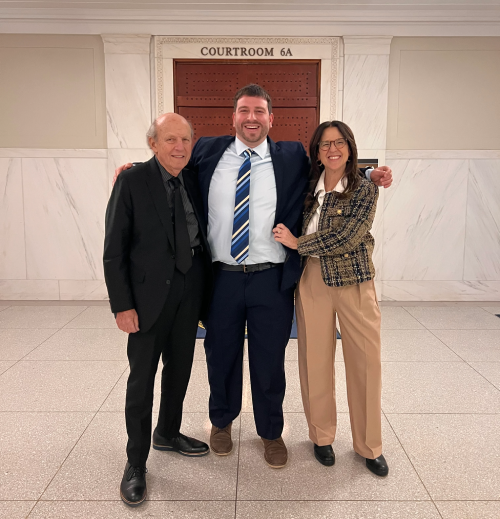
Trust is earned, and that’s why I’m writing this. Before my case even officially started, I walked into office after office and watched lawyers practically drooling for a retainer. Sharks. Pressure. Fear. Felt like everyone was trying to get paid before they even listened. Then I met Stan Levenson. No pitch. No panic. No hand out. He just sat with me, calm, and told me the truth: “Nobody’s kicking…
Milty B
Thanks for all of your diligence and hard work to resolve the case. Your insight into how to proceed and your calm manner when we were at our lowest was most appreciated. From the first contact with you and Stan through resolution of this case, you have always acted in the utmost professional way and with our best interests in mind. I am very satisfied with your work
M.P.

Strategic Criminal Defense Evidence. Strategy. Every Client Matters.
Tell Us About Your Case
Fields Marked With An “*” Are Required

Call
Call Amy Jones at 917-406-7165
Email Amy Jones at [email protected]
Mailing Address
1800 Murray Ave
PO Box 81030
Pittsburgh, PA 15217
© 2026 Levenson Law Firm • All Rights Reserved.
Digital Marketing By: 
*Images are obtained under license from Canva and other third-party stock image providers, with attribution included where required.