
Aliquippa Criminal Defense Lawyer
Levenson Law Firm

Aliquippa Criminal Defense Lawyer
Facing a criminal investigation or charge can have serious consequences for your freedom, reputation, career, and future. Whether you have already been charged or have learned that you are under investigation, understanding the allegations and the evidence against you is an important first step.
Levenson Law Firm represents people facing serious state and federal criminal matters in Aliquippa, Beaver County, and throughout Western Pennsylvania. Amy Jones provides strategic, individualized representation focused on the evidence, the applicable law, and the circumstances of each case.
Strategic Criminal Defense in Aliquippa and Beaver County
Effective criminal defense begins with determining what the government can actually prove. That requires careful review of the evidence, identification of legal and factual weaknesses, and consideration of how each decision may affect the case as a whole.
Depending on the circumstances, a defense strategy may involve challenging the legality of a search or seizure, testing the reliability or admissibility of evidence, examining witness accounts, identifying weaknesses in the prosecution’s theory, negotiating with prosecutors, preparing for trial, or developing a sentencing strategy.
Levenson Law Firm handles serious criminal matters including federal criminal cases, white collar investigations and charges, drug offenses, firearms offenses, sex offenses, and other serious felony cases.
Individualized Representation
No two criminal cases are the same. Amy Jones works directly with each client to understand the facts, explain the available options, and develop a strategy tailored to the client’s circumstances and objectives. The goal is not simply to react to the prosecution’s case, but to make informed strategic decisions at every stage of the representation.
If you are facing a criminal investigation or charge in Aliquippa, Beaver County, or the surrounding area, contact Levenson Law Firm to discuss your situation and legal options.
Request a Confidential Consultation or call Amy Jones directly at (917) 406-7165.
Contact Levenson Law Firm
Call For A Consultation
917-406-7165
Pennsylvania Criminal Law and Procedure
Criminal cases in Pennsylvania are governed by the Pennsylvania Crimes Code, other state statutes, and the Pennsylvania Rules of Criminal Procedure. The law determines the elements the Commonwealth must prove, the grading of an offense, the potential penalties, and the procedures that apply as a case moves through the court system.
Legal issues may arise at many stages of a criminal case, including the legality of a search or seizure, the admissibility of statements, identification procedures, discovery, expert evidence, and whether the Commonwealth has sufficient evidence to establish each element of an offense. Identifying and litigating those issues can materially affect the evidence available to the prosecution and the course of the case.
Misdemeanor and Felony Charges in Pennsylvania
Pennsylvania criminal offenses may be graded as summary offenses, misdemeanors, or felonies, with different degrees within those classifications. The grading of a charge affects the potential penalties, but the significance of a criminal case extends beyond the possible sentence.
A conviction may affect employment, professional licensing, firearms rights, immigration status, educational opportunities, and other aspects of a person’s life. The particular consequences depend on the offense and the individual’s circumstances.
Effective representation therefore requires more than looking at the name or grading of a charge. The evidence, applicable law, possible defenses, procedural history, and potential collateral consequences all matter when evaluating how a case should be approached.
What to Do if You Are Under Investigation or Charged
If law enforcement wants to question you about suspected criminal conduct, you generally have the right to remain silent and to consult with a lawyer. You do not need to try to persuade investigators of your innocence or explain your side of the story before obtaining legal advice.
Avoid discussing the facts of the case on social media or with people who do not need to know them. Statements, messages, photographs, location information, and other digital evidence may become relevant to an investigation or prosecution.
If you have already been charged, comply carefully with all bail conditions and court orders and appear for every required proceeding. Preserve potentially relevant documents, communications, photographs, electronic records, and other evidence, and discuss with your lawyer what should be collected or investigated.
Why Early Defense Preparation Matters
Criminal investigations and prosecutions can develop quickly. Early representation gives defense counsel an opportunity to understand the allegations, preserve evidence, evaluate investigative methods, communicate with law enforcement or prosecutors when appropriate, and identify legal issues before important decisions are made.
Depending on the case, defense counsel may challenge evidence, litigate pretrial motions, investigate witnesses and records, negotiate with prosecutors, prepare for trial, or develop mitigation and sentencing arguments. The appropriate strategy depends on the facts, the law, the evidence, and the client’s objectives.
Frequently Asked Questions
How Can a Criminal Defense Lawyer Challenge Evidence?
A criminal defense lawyer can examine how evidence was obtained, preserved, analyzed, and presented. Depending on the circumstances, that may include challenging an unlawful search or seizure, questioning the reliability of witness identifications or statements, examining digital evidence and its authentication, scrutinizing forensic methods, or challenging whether expert testimony is admissible and reliable.
When there is a legal basis to do so, the defense may ask the court to suppress, exclude, or limit evidence before trial.
What Happens During Plea Negotiations?
Plea negotiations are discussions between the prosecution and defense about whether a criminal case can be resolved without a trial. A proposed resolution may involve particular charges, sentencing recommendations, or other terms.
The lawyer’s role is to evaluate the offer in light of the evidence, applicable law, possible defenses, sentencing exposure, and risks of proceeding to trial. The decision whether to plead guilty ultimately belongs to the client.
How Long Does a Criminal Case Take in Pennsylvania?
There is no single timetable for a Pennsylvania criminal case. The length of a case depends on factors including the charges, amount of discovery, complexity of the evidence, pretrial motions, court scheduling, negotiations, and whether the case proceeds to trial.
Some matters resolve relatively quickly, while complex felony cases can take considerably longer. Your lawyer should explain the procedural posture of your particular case and what to expect at each stage.
How Much Does It Cost to Hire a Criminal Defense Lawyer?
Legal fees vary depending on the nature and seriousness of the allegations, the complexity of the evidence and legal issues, the anticipated amount of work, and the stage of the proceeding. A serious felony or federal prosecution generally requires substantially more investigation and preparation than a less complex matter.
Levenson Law Firm discusses the scope of representation and fee arrangement before representation begins so the client understands what the engagement covers.
Speak With an Aliquippa Criminal Defense Lawyer
If you are under investigation or facing criminal charges in Aliquippa, Beaver County, or the surrounding area, contact Levenson Law Firm to discuss your situation and legal options.
Request a Confidential Consultation or call Amy Jones directly at (917) 406-7165.
Testimonials
Amy is a highly experienced and dedicated counsel who consistently demonstrates exceptional professionalism and legal expertise. She approaches every case with genuine care, treating her clients like family while maintaining the highest standards of integrity and diligence. Amy goes above and beyond to advocate for her clients, ensuring that every detail is handled with precision to achieve the best possible results. If you have a legal matter and are…
Prem B.
We are very pleased Levenson Law Firm. They explained the plan and options. They were friendly and willing for a FaceTime call or zoom meeting. They did an excellent job with our case.
Jacquelyn D.
Amy Levenson is very professional, proactive and has great insights how to handle situations. She is a calm presence to her clients and prioritizes their best interests. She delivered for us. I would use her again in a heartbeat!
Marilyn P.
I couldn’t recommend them more.
Trust is earned, and that’s why I’m writing this. Before my case even officially started, I walked into office after office and watched lawyers practically drooling for a retainer. Sharks. Pressure. Fear. Felt like everyone was trying to get paid before they even listened. Then I met Stan Levenson. No pitch. No panic. No hand out. He just sat with me, calm, and told me the truth: “Nobody’s kicking…
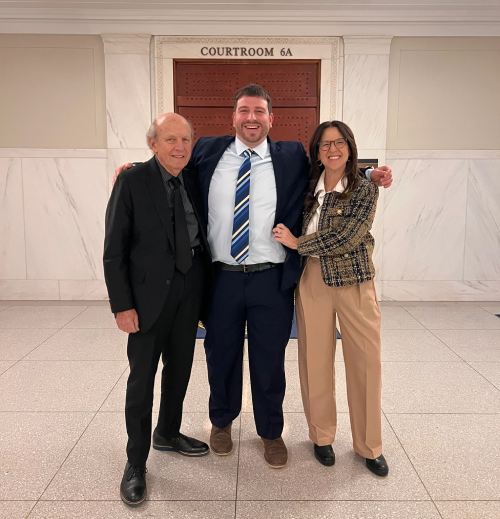
Milty B
Thanks for all of your diligence and hard work to resolve the case. Your insight into how to proceed and your calm manner when we were at our lowest was most appreciated. From the first contact with you and Stan through resolution of this case, you have always acted in the utmost professional way and with our best interests in mind. I am very satisfied with your work
M.P.

Strategic Criminal Defense Evidence. Strategy. Every Client Matters.
Tell Us About Your Case
Fields Marked With An “*” Are Required

Call
Call Amy Jones at 917-406-7165
Email Amy Jones at [email protected]
Mailing Address
1800 Murray Ave
PO Box 81030
Pittsburgh, PA 15217
© 2026 Levenson Law Firm • All Rights Reserved.
Digital Marketing By: 
*Images are obtained under license from Canva and other third-party stock image providers, with attribution included where required.